Winter mornings in Cabo are pretty magical. Suddenly, the calm ocean goes quiet, and before you know it, the majestic giants appear out there on the horizon. Whale migration in Cabo isn’t a fluke, though; it’s a totally reliable natural cycle that brings some of the world’s largest marine mammals to Baja California Sur.
When people talk about ‘whale season’ in Cabo, this is exactly what they mean. Whales leave their cold feeding grounds up north and travel a mind-boggling thousands of miles to mate, give birth & rest in warmer waters. Right in the middle of their route, Cabo is why you can count on spotting them.
What whale migration in Cabo San Lucas actually means in real life
Whale migration is the seasonal journey from cold feeding grounds up north to warm breeding waters in the south. You’ll find that Cabo is one of the most crucial winter stopovers. Most crucial winter stopovers. These whales aren’t just passing through; many stick around for weeks or even months before heading back up north again.
It’s worth noting that Los Cabos is a bit of a hot spot for whale sightings compared to other places. That’s because Cabo sits right along a major migration corridor. A major migration corridor. This means you can see whales all over the area, not just out at sea. Timing is everything
When the whales actually start showing up in Los Cabos
Whales usually start to appear in late fall, and then show up in bigger numbers as winter settles in. The season usually runs from December to April, though the exact timing does shift a little bit from year to year. December to April. The ocean conditions have a lot to do with it.
Early in the season, you’re more likely to spot energetic adult pods. As the season peaks in winter, the number of mothers with newborns will be the highest. Mothers with newborns will be the highest. As the season winds down, the sightings become a bit more mellow and intimate.
It really does feel like it changes each time. A week in Cabo isn’t going to be just like any other. A bit of unpredictability is part of the fun. Water temperature, food availability & natural variation all play a role in when you can see the whales.
Why do the whales make this epic journey to Baja California Sur?
This journey isn’t easy, so the whales have a pretty good reason to make the trip. Warm water is a safer haven for newborn calves, who won’t have had time to develop proper blubber yet. It’s about survival.
Calmer seas and the warm, nutrient-dense waters of Baja California provide an ideal environment for whales to mate, give birth, and nurse their young without worrying so much about predators, which also helps the adults conserve energy for mating and socializing. An ideal environment for whales, this region is giving them what they need to live their best lives.
Why Cabo’s geography makes it a perfect spot for whales

It’s worth noting that Cabo’s unique geography plays a big part in all this. The meeting point of the Pacific Ocean and the Sea of Cortez creates deep waters offshore, which just happens to be sheltered from the open ocean by bays like Cabo San Lucas. Cabo’s unique geography plays a big part. It’s not often you get this kind of balance
The open Pacific gives the whales a clear path, while the protected bays near Cabo San Lucas provide a haven for the mothers and their young. A haven for the mothers and their young. This setup makes it possible to see the whales right up close. It really is nature’s doing
Whale Behaviour and Habitat: What draws whales to this incredible location
Cabo is one of those places on this planet that is just a magnet for whales. Every year, travellers from all over the world flock to this spot, drawn by the promise of witnessing these incredible creatures in all their glory. A magnet for whales. Often called the ‘aquarium of the world’, this region is home to not just the whales, but a ton of other marine mammals, from playful dolphins to the majestic blue whales.
The journey the grey whales take to get to Cabo is nothing short of incredible. They travel all the way from the icy cold waters of Alaska to the warm sheltered bays of Baja, including the famous Laguna San Ignacio. Nothing short of incredible. There, in the calm waters around San Jose del Cabo & beyond, the grey whales go about life as usual, giving birth and nurturing their young.
It’s a real privilege to be able to witness this. What really makes Cabo stand out is the incredible variety of whale behaviour on display. Incredible variety of whale behaviour is on display. Take, for example, the early morning when the sea is at its calmest, you might spot a mother & her young calf gliding gently through the bay, or catch sight of a humpback breaching against the sunrise.
Every so often, you might even be lucky enough to catch a glimpse of a blue whale sighting, the largest animal on the planet. It really does feel like every time is different. The largest animal on the planet.
Of course, we want to make sure that every visitor gets to enjoy the moment to its fullest. For those seeking a chance to get up close & personal with whales, private tours are available, offering a tailored adventure that lets you connect with these incredible creatures on your own terms. Private tours are available. Many tour operators in Cabo adhere to strict conservation guidelines, which ensure that both the whales and the visitors are safe & respected.
This commitment doesn’t just give you peace of mind; it also helps protect these incredible creatures for future generations. Planning a visit during the peak season, December to April, pretty much guarantees you’ll get to see some seriously spectacular whale behaviour. Peak season, December to April. Whether you’re mapping out a trip to Cabo San Lucas, San Jose del Cabo, or the downright gorgeous lagoons of San Ignacio, there are comfortable hotel options and top-notch guides just waiting to take you on the adventure of a lifetime.
Don’t forget your camera, every outing is an opportunity to snap some memories that are going to last you for years to come. Every outing is an opportunity to snap some memories.
Things have never been better for conservation efforts in the area, what with local and international groups working together to protect those magnificent whales and the incredible marine life of the Baja Peninsula. As you start making plans for your trip, make sure to pick a reputable tour operator who puts both your comfort and the whales’ welfare at the top of their list. Conservation efforts in the area have never been better.
With the kind of biodiversity it’s got, the warm and welcoming atmosphere, and endless opportunities for discoveries, Cabo’s justifiably proud of being a gateway to all the wonders that lie beneath the waves. So grab a map, pick your dates, and get ready to experience the pure magic of whale watching in one of the most celebrated marine environments on the planet. Pure magic of whale watching.
Top places to watch the Whale Migration in Cabo
Check out this handy chart, which highlights some of the best whale-watching spots in the Cabos area, including the species you can expect to see, the best time of year, and the best ways to see ’em. Best whale-watching spots in the Cabos area.
| Location | Species Seen | Best Months | Viewing Methods |
|---|---|---|---|
| El Arco (Lands End) | Mainly humpback, occasional blue/orca | Dec–Apr (peak Jan–Feb) | Catamaran, zodiac or pirate-ship tours (morning departures) |
| Playa El Médano (Cabo SL) | Humpbacks at a distance | Dec–Mar (best Jan–Feb) | Shore viewing (binoculars); kayak or SUP tours (no chasing whales) |
| San José del Cabo Coast (Corridor) | Humpback, occasional gray whales | Jan–Mar | Boat tours (from Marina or local charters); beaches like Palmilla for distant viewing |
| Cabo Pulmo (East Cape) | Humpback (and rare orca/blue whales) | Dec–Mar (rare) | Specialized eco-tours; shore dive/snorkel (but no whale snorkelling allowed) |
| Cabo San Lucas “Diamond Zone” beaches (Divorce Beach, Solmar, Pedregal Cliffs) | Humpbacks from shore | Dec–Mar | Land viewing (at sunrise/dusk) |
| San Jose del Cabo waterfront (Malecon) | Humpbacks seen offshore | Jan–Feb | Land viewing |
What whales might you spot during migration season?
Humpback Whales, Blue Whales, and Gray Whales are all part of the sealife, and are spottable from Cabo. Spottable from Cabo.
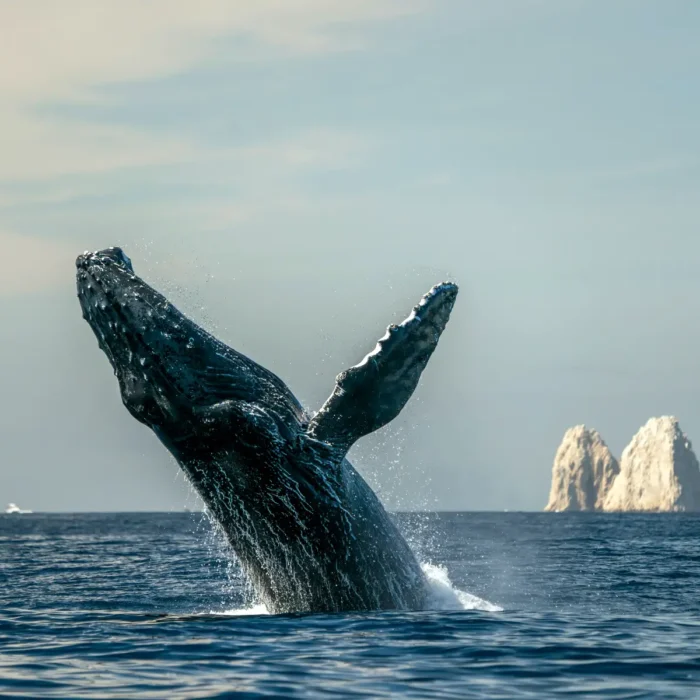
Humpback whales are the most frequently seen whales in Cabo San Lucas. They’re known for their massive fins and the whole dramatic surface display of breaching and slapping their tails. The most frequently seen whales in Cabo San Lucas. They’re pretty action-packed.
Blue whales are sometimes spotted near Loreto in the Sea of Cortez, especially during their breeding and feeding seasons. These are the biggest creatures on the planet, and when they’re in the area, it’s a real treat to see them. The biggest creatures on the planet. The Sea of Cortez is well-known for its biodiversity and is home to over 30 species of marine mammals, including a bunch of different whale species.
Grey whales do show up less often this far south, but sometimes you’ll still catch a glimpse of them during peak season. These whales are known for being pretty curious and sometimes even come to say hello when the boats get a bit too close. Less often this far south.
Orcas, or killer whales, are highly intelligent and travel in small groups; they’re pretty rare in Cabo. The conditions really determine what you’ll see. Pretty rare in Cabo.
What seeing whales during migration is all about
Whale watching isn’t just about spotting that fin in the distance. You can see all sorts of things: a breach, a whale rolling slowly at the surface, or the steady stream of spouts rising from the water. It’s all about the behaviour.
Sometimes on the tours, you can even hear those whale songs through special underwater microphones, and that really adds a whole new level of immersion to the experience and lets you connect with these incredible creatures on a whole new level. A whole new level of immersion to the experience.
Later in the season, you might see mother-and-calf pairs moving slowly and sticking together; these are lovely moments to observe in detail. Take your time, and you’ll pick up on some amazing details. Mother-and-calf pairs moving slowly and sticking together.
Some tours are non-stop action, while others can be pretty laid back, but both are all part of the experience. Wildlife’s all about the unknown. Wildlife’s all about the unknown.
Watching Whales in a Catamaran vs the Beach Coast: What’s the difference?
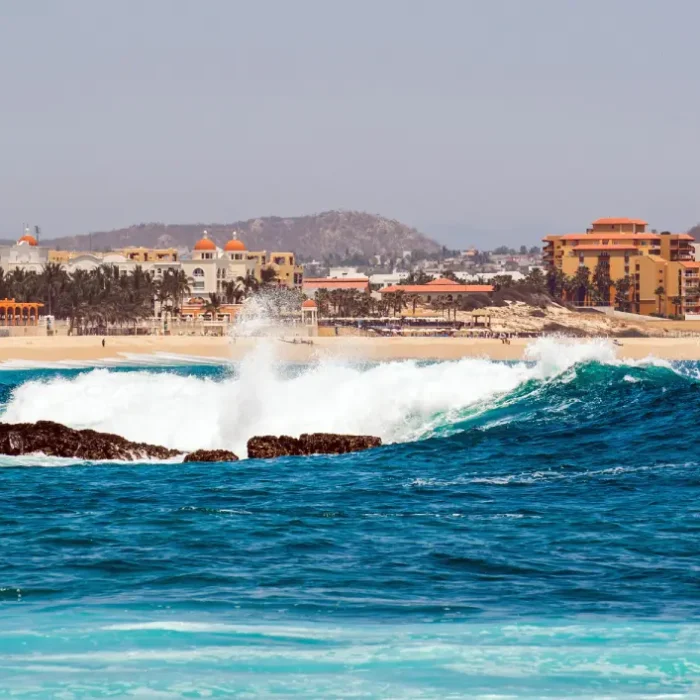
Whales can sometimes be spotted breaching offshore from beaches, resorts, or elevated viewpoints during peak season, like when the conditions are right at Playa El Médano or the Pedregal cliffs on a quiet day. Sticking to a catamaran tour really ups the ante. Sticking to a catamaran tour really ups the ante.
From the beach, you can only ever get a glimpse of whales way off in the distance, and even then, it’s no guarantee you’ll catch a glimpse at all. In contrast, a dedicated whale watching tour lets you get right into the whales’ backyard, and you’re guaranteed to get a lot closer to the action. A lot closer to the action.
Plus, it’s not just about getting close; a catamaran tour ramps up the whole experience into a real adventure. These tours are specifically designed to get you face-to-face with the wildlife while still making sure you’re comfortable, so you end up with a really memorable experience that includes checking out all the iconic spots like the Arch and the beach at Lovers Beach. A really memorable experience that includes checking out all the iconic spots.
Why every whale watching experience is different
How this all pans out depends on a few things, like the day, the weather and how long you’re out on the water. Rushed or crowded outings can take away from the magic. Rushed or crowded outings can take away from the magic. How comfy you are can really make or break the experience.
It’s not just about respecting the whales either. Moving slowly and keeping your distance lets the whales set the pace. Lets the whales set the pace.
You want a tour operator who cares about the animals as much as you do. That way, you can be sure that your whale watching experience is both fun and eco-friendly. Fun and eco-friendly.
The best tours balance looking out for the humans with looking out for the whales. It’s not about getting right up close; it’s about being present. It’s about being present.
Planning your Cabo vacation around whale migration
If whale migration is what gets you most excited, you should plan your trip between December and March. January and February are peak months, especially for mothers with their calves; that’s when you’re most likely to catch a glimpse. January and February are peak months.
If you’re trying to decide between a day trip or a longer tour, just remember that each one has its pros and cons. Multi-day tours will often give you more chances to spot whales and more flexibility in your schedule, while day trips are better if you’re short on time. Each one has its pros and cons.
Whale season is actually pretty great weather-wise, mild and calm, which makes it easy to combine whale watching with some beach time, meals and exploring the bays. It’s a great time to be outdoors. A great time to be outdoors.
Even if whales aren’t the only thing you’re interested in seeing, the migration season is a great bonus; the coastline really comes alive. The coastline really comes alive.
Practical Tips for Whale Watching
Best time of day: If you can plan it, morning tours (around 8-11 am) are usually best, the sea is usually flat and calm, making it a lot easier to spot whales. Afternoon or sunset cruises can be fun too, but you’re more likely to get choppy water. Morning tours are usually best.
Booking: Whale watching tours tend to fill up fast in peak season, so it’s a good idea to book ahead, especially for smaller groups or Zodiac trips. Many tours give you a free cancellation option if you need to change your plans. Book ahead in peak season.
Cost: Expect to pay $50-$100 USD per person for a tour, depending on the boat type. Luxury catamarans tend to be on the pricier side, while smaller pangas are more affordable. $50-$100 USD per person for a tour. Many tours include snacks and drinks, and you might need to pay a small fee for harbour fees.
Safety and Regulations: Whale watching is strictly regulated in Mexico; boats have to stay at least 60-100m away from whales, not go faster than 9 km/h and not touch or chase them. Tours have to be with a licensed and responsible operator. Strictly regulated in Mexico. Plus, you’ll need a life jacket on every tour.
What to bring: Binoculars, a camera with a good zoom, a hat, some reef-safe sunscreen and a few layers for cooler mornings. If you’re prone to seasickness, grab some meds before you go. What to bring: Binoculars, a camera with a good zoom, a hat.
Kayak/ Snorkel: Don’t even think about getting in the water with the whales; it’s against the law. Just enjoy watching them from the boat. It’s against the law.
Weather: Whale season is usually pretty calm and dry, with temps around 75-80f (24- 27 °C). Be sure to check the weather forecast and sea conditions before you head out. Pretty calm and dry.
Sunset viewing: Some tours will combine whale watching with sunset sailing, and that can be a real highlight if you time it right. A real highlight if you time it right.
Tour duration: Tours usually last between 2 and 3 hours, long enough to get a good look without feeling rushed. Between 2 and 3 hours.
Whale activity rhythm: Whales tend to follow a pattern of a few days of high activity followed by a bit of a break. A few days of high activity.
Multi-day tours: Go on a multi-day trip to San Ignacio Lagoon, and you can even spend the night sleeping under the stars; it’s a whole other level of experience. A whole other level of experience.
Frequently asked questions about whale migration in Cabo
Is Whale Watching a Given in Cabo?
Well, honestly, no wildlife experience is ever guaranteed, but what you do get in Cabo is one of the most reliable whale migration patterns in the area. Think of it as a pretty good bet. A pretty good bet. Sightings are a pretty common occurrence during the season.
And what sets Cabo apart is the diversity of whales that you can see here, so even if you go out multiple times, you’re likely to have a different experience each time. A different experience each time.
What’s the Best Month to See Whales in Cabo?
It generally tends to be January and February when there are the biggest concentrations of whales, including mums and their young, which is pretty special. And while December and March aren’t so bad either, you get the picture, the best months are usually those two. January and February are the best months.
How Close Can You Get to Whales in Cabo?
Sometimes whales will swim right up to the boats on their own. Just keep in mind that responsible operators know how to respect these creatures, and they won’t push for a closer look. Responsible operators know how to respect these creatures.
So, if the whales do come and visit, it’s still a pretty cool thing to see. The real key is respecting their space. Respecting their space.
Guided tours maintain a respectful distance from whales in compliance with federal regulations. A respectful distance from whales.